
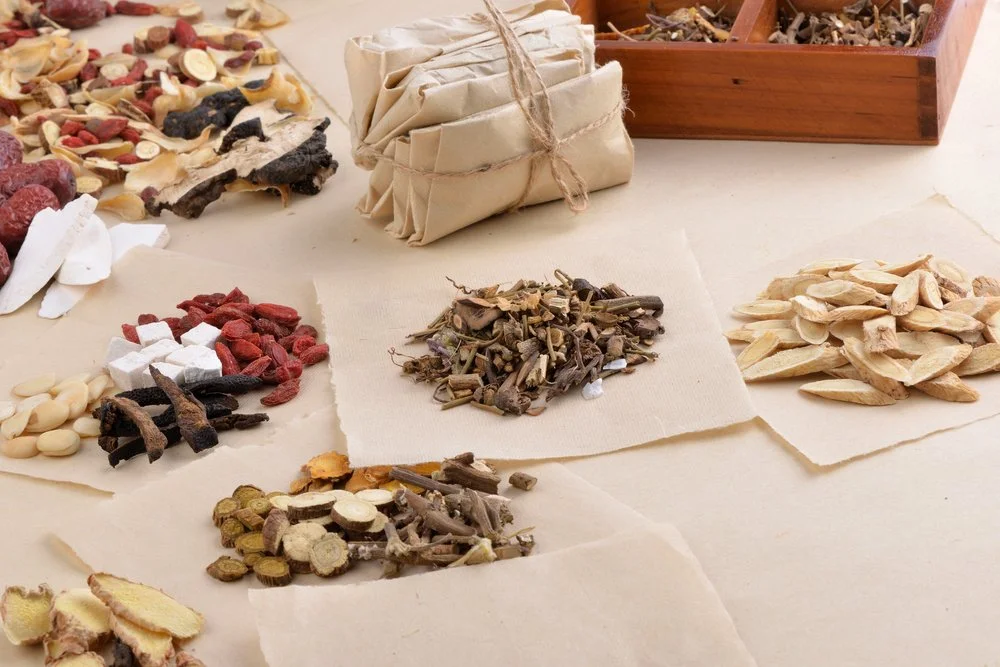
Herbs
The human body is not an isolated self-sufficient world in itself. It is highly dependent on the outside environment and, therefore, what we put into our bodies can have a profound influence on our health. This is the basis behind all pharmacotherapy, including herbal medicine. Traditional Chinese herbology has one of the most extensive pharmacopoeias in the world. Typically, several herbs that have synergistic or complimentary effects are combined in a single formula, enabling the treatment of a broader range of symptoms. This strategy also allows the herbalist to tailor the formula for the specific needs of the patient.
Many of these herbs are the leaves, twigs, and roots of rather obscure plants that most people will not recognize. Some, however, are variants of common household items such as ginger, peppermint, and cinnamon. Today, herbal formulas are usually prepared in the traditional way by boiling the herbs together in water to produce a decoction, which can be given to the patient to drink, or can be further processed into a powder, pill, or capsule with a longer shelf-life.
-
Your formula will likely be given in granular or powder form. It will come in a container with a scooper inside, and the dosage will be on the outside label. You will prepare it in the same manner as instant coffee. Scoop your dosage into a mug, add hot water and stir. Then, drink when it has cooled enough. Alternatively, the herbs may be in pill or capsule form to be taken orally at the proscribed dosage.
-
significant herb-drug interactions are far less common than drug-drug interactions. However, the more prescriptions you are taking, the more care must be taken in selecting and dosing an herbal formula. To be on the safe side, it is recommended not to take your herbs at the same time as your medications.
-
Food sensitivities, and especially food allergies, will occasionally require substitutions to be made in a patient’s herbal formula. However, when the correct formula is given, patients not only tolerate the herbs, but often find that their food sensitivities are alleviated.
-
From accelerating the recovery of physical injuries to improving the duration and quality of sleep, herbal medicine probably has the broadest application in my repertoire. I have found it to be most effective in treating digestive disorders, menstrual disorders, and the sequelae of colds and flus.
“Greg is a healer...he is very knowledgeable about a variety of conditions and how best to treat them with a multifaceted approach using acupuncture, massage and herbal treatments. I've enjoyed seeing him for many years and call him whenever I am feeling out of balance.”
James R.